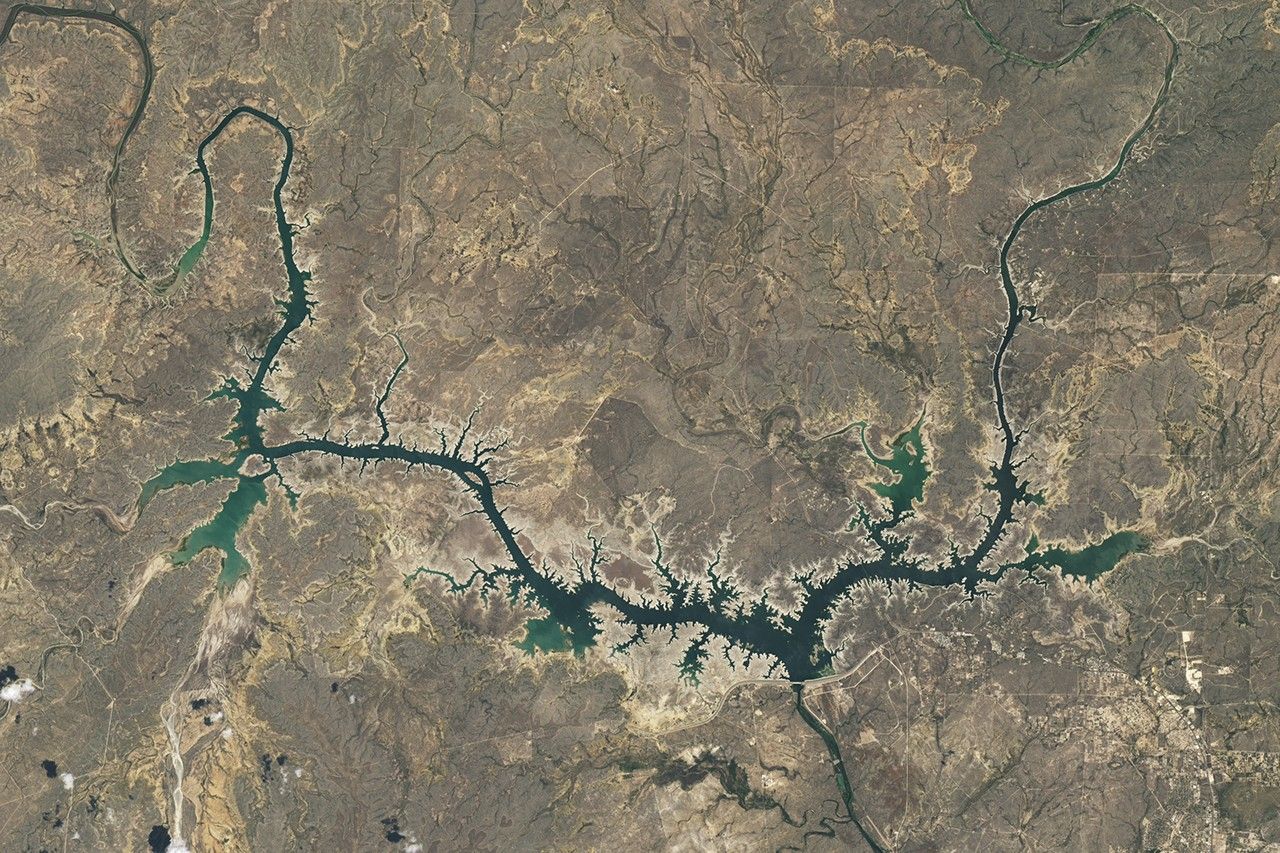
Amistad and Falcon reservoirs remain at low levels despite recent rain across parts of the Rio Grande watershed, with implications for Harlingen's drinking-water supply.
The International Boundary and Water Commission's daily report for Oct. 28 put Amistad at 28% of its total binational conservation capacity and Falcon at 17%.
Those figures measure storage in the full reservoirs shared by the United States and Mexico. They differ from the Texas-specific storage percentages published by the Texas Water Development Board.
The low levels remain a concern for the Rio Grande Valley, which depends on water stored upstream to help meet municipal, agricultural and industrial demand.
What it means for Harlingen
The Rio Grande is Harlingen's source of raw drinking water, according to Harlingen Waterworks System.
Harlingen has access to approximately 21,338 acre-feet of Rio Grande water annually, according to the RGV Business Journal. The amount available for use is reduced by losses during transportation and storage.
The city's residential, commercial and wholesale customers use between 13 million and 15 million gallons of treated drinking water per day, the publication reported in June.
The Texas Water Development Board's 2026 regional water plan identifies the Amistad-Falcon reservoir system as a major existing water source for Harlingen and other Rio Grande Valley communities.
The regional plan also examines future supply needs, including conservation and infrastructure improvements.
Water infrastructure investment moves forward
Regional agencies are working to reduce water losses through improvements to irrigation canals and distribution systems.
The North American Development Bank announced plans in August for nearly $164 million in water conservation investments involving 12 irrigation districts in the Lower Rio Grande Valley.
The proposed projects include lining open canals, converting canals to pipelines and improving system efficiency. The bank estimated that the work could conserve nearly 44,000 acre-feet of water annually.
The funding package included up to $76 million from the bank, nearly $70 million from the Texas Water Development Board and additional federal and irrigation-district contributions.
The Texas Water Development Board subsequently approved $69.5 million in grants on Sept. 10, according to a Texas Senate announcement. The announcement identified 17 projects across 12 irrigation districts in Hidalgo and Cameron counties.
Reservoir levels remain important
The Oct. 28 federal readings show that both reservoirs remain well below their full conservation capacities.
The International Boundary and Water Commission publishes updated reservoir and Rio Grande flow conditions on weekdays, providing a continuing measure of stored water in the basin.